After-School Snacks for Every Schedule

Back-to-school season signals sports, schedules, and one other important staple – snacks.


If you hear, “I’m hungry!” the second your child hops in the car, you’re in good company. It’s common for kids to have an appetite after school. School-aged children eat early in the day, oftentimes before noon. It’s no wonder they crave mid-afternoon munchies!


It’s important for your kids to have perfectly portioned snacks – you want them to feel satisfied without spoiling their dinner. A nutritious diet, including both meals and snacks, aids in strong bones, teeth, and gums.

Here are 3 smile-worthy snacks perfect* for every pick-up:

*Click the links to learn how certain foods benefit growing bodies and smiles.

Carpool Snacks

Although it’s important to pack a tooth-friendly snack, make sure it’s car approved too! Stick to dry snacks in plastic baggies:

• Non-messy fruits, like grapes or apple slices

• Nuts mixed with dried fruit

• String or cubed cheese

At-Home Snacks

If school is close to the kitchen, why not skip the car food and savor snack time at home? Before you start dinner, cook up one of these creative snacks:

Goat Cheese and Veggie Pinwheels, filled with zucchini, carrots, and whole grains

Homemade hummus, served with pita chips and broccoli

After-Sport Snacks

Little athletes have big appetites! Fuel your all-stars with these post-practice pleasers:

• Soy Nut Clusters, loaded with protein

• Vitamin-rich fruits, such as oranges or bananas

For more snack ideas, check out our other recipe blogs.

26 and Uninsured: 5 Options After You Age Out Your Parents’ Plan

You have your whole life ahead of you – get covered today!

Birthdays often mark major milestones: Driver’s license at 16, voter registration at 18… 

…and getting kicked off of your parents’ health insurance at 26. 

Prior to blowing out your 26 candles, health insurance was probably not top-of-mind. That may be because your parents’ coverage probably made things easy

It’s time to take charge of your health and declare your independence! It’s important to have health and dental insurance, even if you don’t get sick very often. 

It’s time to birthday shop for some options:

 1. COBRA

Some health plans offer COBRA continuation coverage, which allows 18-36 months of coverage after you age out of your parents’ plan. Learn if you’re eligible.

2. Employee Health Benefits 

If your job offers health insurance, you’ll likely have 30-60 days to enroll after you lose your parents’ benefits, even if it’s not during an open enrollment period.

If your parents’ plan included dental coverage, but your current job doesn’t, look into getting your own individual plan. 

3. Private Health Plans

 Individual benefit plans may not be as expensive as you think. Price out your options and develop a savings plan. You may have to make some tough choices, but you’ll stay covered and healthy.

4. Government Health Plans

You may qualify for state-funded programs, such as Medicare and Medicaid. Browse the health insurance exchange to find a plan for your needs and budget.

5. Catastrophic Plans

We know, we know. You’re in your mid 20s – you rarely get sick! But that doesn’t mean life is accident-free. Adults under 30 can enroll in a catastrophic health insurance plan that covers worst-case scenarios. 

As an emerging adult, insurance might seem like just another bill to pay. But the cost is too high not to have it. 

You have your whole life ahead of you – get covered today!


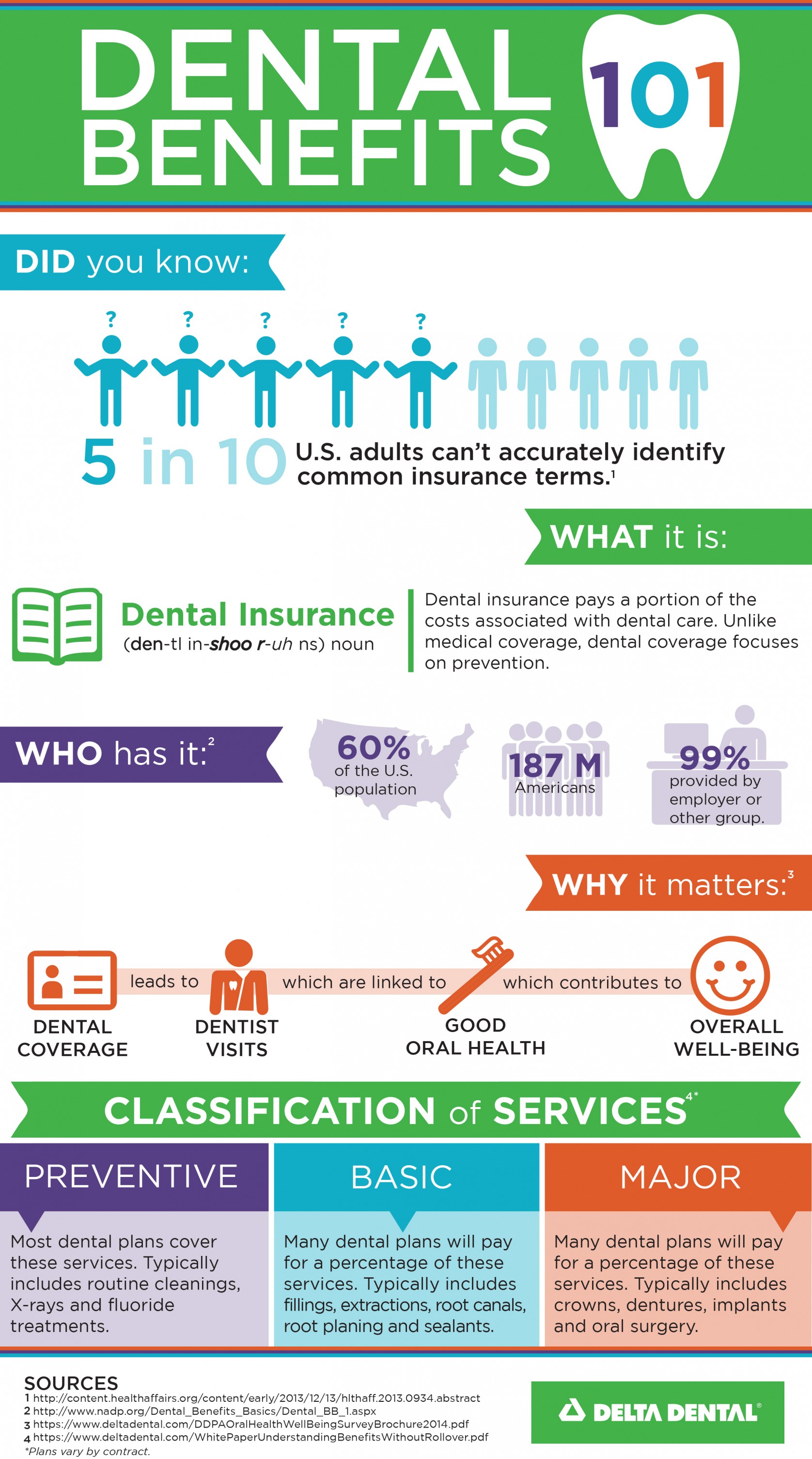
Dental Insurance 101 [INFOGRAPHIC]

Let us help you understand every word of your insurance plan. Use this infographic to navigate the most commonly used terms!

We know that insurance can be awfully confusing. So, to make sure you’re getting the most out of your plan we’re breaking down the insurance lingo with this easy-to-follow infographic.

Don’t stop learning! Continue onto our Insurance 102 and Insurance 103 Infographics to learn more. Still confused? Reach out to us on Facebook or Twitter and we would be happy to help!

3 tips to get braces off faster

*Updated July 2023

If your child has braces, you may be wondering how long they’ll need to keep them on.

The length of time braces will be on usually depends on the problem that’s being treated. Most braces are on for one to three years. While years in braces may sound unpleasant, it’s important to have the treatment for a healthy mouth.

If you’re looking for ways to get you or your kid’s braces off faster, check out some tips below:

Good oral hygiene helps get braces off faster

Practicing good oral hygiene is important for the health of your mouth. A good cleaning routine may also help get braces off faster! Here are four things your kids can do to keep their mouth clean:

Rinse with water after each meal

It’s easy for food to become lodged in braces after eating. This stray food creates more opportunity for plaque to form. Plaque that is not removed may create pockets of decay behind the braces. A quick rinse can dislodge and remove this loose food when they don’t have a moment to brush.

Brush their teeth twice a day

Staying with a regular regimen of brushing twice per day with a fluoride toothpaste will help keep the mouth clean and braces free of debris.

Pro tip: Don’t forget a toothbrush and toothpaste when traveling away from home. For youth, bringing a toothbrush to school can help keep their braces clean during the school day.

Floss daily

Flossing with braces can be difficult, but it’s an important step in taking care of your child’s oral health. Talk to your orthodontist if you have questions about flossing with braces. They may have recommendations for flossing tools that are safe and effective for braces.

Get regular teeth cleanings

Just because your child has braces and visits the orthodontist doesn’t mean they can forgo their normal teeth cleaning schedule! It’s important that your child continues to see their dentist at least once a year for preventive cleanings, even with braces on.

Watch what your kids eat with braces

While it’s imperative that parents and children are familiar with behaviors that can help get braces off faster, it’s also important for them to understand behaviors that may prolong treatment. One of these harmful behaviors is disregarding food restrictions. Food restrictions with braces may not be fun, but ignoring them can damage braces and make them less effective.

Food restrictions with braces

It’s a good rule of thumb to keep hard, chewy, sticky, and crunchy foods away from your kids with orthodontia. This includes foods such as:

  • Bagels and hard rolls
  • Caramel and gum
  • Hard candy
  • Pretzels
  • Popcorn
  • Other sugary foods that cause plaque and bacteria buildup

Some foods, such as corn on the cob or apples, are notorious for causing damage to braces.

Biting into these foods causes extreme pressure on the front of your teeth and, consequently, the brackets and wires on the outside of your front teeth. This may cause damage to your child’s orthodontic appliances.

To continue to eat these types of foods, cut or prepare them in a more manageable size and consistency. That could mean cutting into bite-sized pieces, or even mashing into a smoother consistency, like applesauce!

Follow the orthodontist’s instructions to get braces off faster

Listening to your child’s orthodontist is important when it comes to getting their braces off sooner. Take the time to understand how to care for the braces and create routines that support this care.

Set up a routine for braces care

As a parent, you’ll need to remind them about their elastics and rubber bands, how to brush properly, how to floss properly, and so much more. To make it easier on yourself, create a “braces care” routine for your child to follow each day.

Start by writing it all down on paper. Include the time of day for each event, like brushing or replacing rubber bands. You can even set reminders on your phone until it all becomes a habit for you and your child. It’s much easier and far more manageable if you and your kids know exactly what they’re supposed to do and when.

Orthodontic appointments are important

Don’t skip any appointments or follow-ups with the orthodontist. These are the times that your orthodontist can check for any problems that may prolong treatment. If your child has an orthodontic emergency – for example, if a wire or bracket breaks – have it taken care of as quickly as possible.

Less time in braces is possible

If you and your kids follow these three tips, at worst, they should get their braces off when they’re supposed to. At best, you may even shave a few months off treatment time. Not following these tips can seriously impact your braces regimen, adding months or even years to the time in braces.

Each mouth reacts to braces differently, but following the advice of the orthodontist, creating a good daily routine, eating the proper foods, and practicing good oral hygiene should help your kids get their braces off faster.

To learn more about childhood braces, check out “How Young? The Surprising Truth Behind Early Orthodontics”.

Delta Dental of Wisconsin is Committed to Helping Our Community

At Delta Dental of Wisconsin (DDWI), it’s our mission to improve oral health and wellness, and we pride ourselves on giving back to our Wisconsin communities. 

We recently sat down with Sue Shulfer, our director of human resources, to talk about DDWI’s participation with United Way and our overall company culture of community involvement.

Q. Explain DDWI’s involvement with the United Way of Portage County. 

SS: The yearly United Way campaign is the largest employee and company campaign we focus on at Delta Dental of Wisconsin. The need in our community is great; our local United Way organization supports multiple agencies and addresses many critical issues. DDWI and the United Way of Portage County believe that together, we can accomplish more than any one of us could accomplish alone in serving the unmet needs of our community’s most vulnerable populations. 

Q. DDWI is a community pacesetter. What does that mean?

SS: DDWI, along with a few other select organizations, coordinate their campaign early to set the pace for the rest of the community. The generosity of DDWI employees serves as a role model for other organizations. All together, the pacesetters raise approximately 10% of the total campaign goal.  

Q. What were the results from this year?

SS: DDWI exceeded both our monetary and participation goals again this year.  This year our campaign resulted in 238 employees contributing an outstanding $89,420.50. Along with the DDWI corporate contributions, we presented a check to the United Way of Portage County for $275,000.  

Q. How does DDWI foster a culture that allows employees to get involved in supporting initiatives like the United Way or other volunteer events? 

SS: DDWI is a generous organization that makes many charitable contributions. Our employees align with this philosophy.  This part of our culture is a big reason employees join DDWI and remain employed for many years.  

Earlier this year we implemented two new programs that recognize the importance of charitable nonprofit organizations and community involvement by our leadership and employees.  The Matching Gifts program offers employees who donate money to a charitable organization a corporate match of up to $500 per year, and our Volunteer Involvement Program allows an employee up to 8 hours of paid time off for community service volunteering.

Q. DDWI employees seem to be a giving group of people. What other organizations or events do the employees help support during the year?

SS: Each year, employees coordinate charitable drives that focus on helping groups within our communities such as children, special needs populations, and animals. For example, a few weeks ago we completed a school supplies collection. And this week, we announced a DDWI team for an upcoming MS Walk for our employees to voluntarily participate in.  

At Delta Dental of Wisconsin, we’re proud to foster a culture of giving that helps those who need it most.

Cancer Diagnosis? Here’s How to Protect Your Dental Health

The side effects of cancer treatment can cause dental problems. Learn what you can do to alleviate these health concerns.


You may be surprised to find your dentist on your cancer therapy team. To prevent serious mouth problems, see your dentist at least one month prior to starting cancer therapy.

Your dentist will check and clean your teeth, care for any existing problems, and show you how to take care of your teeth to prevent therapy-related issues. If you have already begun cancer therapy and didn’t see a dentist, see one as soon as possible.

Cancer therapy drugs kill cancer cells, but can harm normal cells including those in your mouth.

Side effects can include problems with your teeth and gums, the soft lining of your mouth, and the glands that make saliva. Dry mouth is a common side effect in cancer treatment.

Minimize dry mouth with these tips:

• Use prescription fluoride toothpaste. Ask your dentist which one is right for you.

• Avoid toothpastes with lauryl sulphate.

• Carry a bottle of water so you can drink when your mouth feels dry.

• Use an alcohol-free mouthwash.

• Increase your dental visits to three or four appointments per year.

Throughout the course of your therapy, you may experience oral symptoms. Some dietary changes can lessen oral symptoms. 

Try these tips:

• Choose foods that are easy to chew and swallow.

• Drink liquids to help with swallowing.

• Mix foods with liquids to make them easier to swallow.

• Eat fruits that are high in water, such as melons.

• Avoid carbonated beverages; sugar-containing beverages, and alcohol.

• Eat smaller, more frequent meals.

• If mouth sores develop, avoid acidic, spicy, rough, or salty foods.

Cancer treatment is no easy battle. Luckily, your group dental plan may include Delta Dental of Wisconsin’s Evidence-Based Integrated Care Plan, which provides benefits for additional cleanings during the course of cancer therapy. With some extra dental care, you can make your treatment more comfortable.

8 Ways to Drink 8 Glasses of Water

Water is essential. It comprises 70% of the Earth’s surface, and without it, we wouldn’t exist.

Every system of your body depends on H2O. It promotes a moist environment for your ears and throat, flushes away toxins, and helps you feel (and look) your best.

Water is important for your teeth, too. It washes away plaque-causing food debris and keeps your mouth hydrated.

Our bodies constantly eliminate water – through bathroom breaks, sweating, and even breathing. This makes water consumption extra important. Your perfect water amount depends on factors like age, activity level, and climate. However, the “drink eight, 8-ounce glasses of water per day,” rule is a good baseline.

How can you get your daily water supply? It’s easier than you think.

Get your 8 for 8 with these 8 tips:

Did you know you could eat your water? In fact, you may already hydrate with some of your favorite foods:

1. Celery

Water and fiber team up in this nutritious, crunchy stick. Plus, chewing stimulates saliva flow, which helps wash away harmful teeth bacteria.

2. Watermelon

The first half of the word should give you a clue. This seed-filled summer favorite is 90% water.

3. Soup

You may not think of summer as soup weather, but your thirst disagrees. Make sure to look for a low-sodium version, as high salt levels can leave you dehydrated.

4. Ice Pops

These eye-pleasing pops are made mostly of ice. They provide extra H2O and easily increase your daily fruit count.

Not in the mood for a snack? Try these tips:

5. Set an alarm.

There are plenty of apps designed to keep you hydrated. If you want to keep it simple, set a “water alarm” for every few hours.

6. Add a flavor.

A fruit infuser water bottle is an inexpensive way to add natural sweetness. If you’re not into fruit, try a sugar-free flavor powder.

7. Make it sparkle!

Add bubbles to make your water regimen a 5-star experience. Buy your favorite brand or make your own at home.

8. Keep it nearby.

“Water, water everywhere,” should be your new motto. Make it easy to drink water – keep a bottle in your car, at your desk, and at any other personal hotspots.

Drink up for a pitcher perfect you!

Swimming Pools and Your Teeth | The Link Between Chlorine and Teeth

It’s no secret that most pools contain chlorine, a chemical used to kill germs. However, you might be surprised to learn chlorine can cause more than itchy eyes and green-tinted hair (if you don’t shower after a dip). Pool water chemicals can create brown deposits of tarter on your teeth, also known as “swimmers’ calculus.”.

You don’t have to be a math wiz to solve this equation: chlorine and teeth can = tooth erosion. Athlete swimmers and recreational splashers, particularly those who swim more than 6 hours a week, face potential stains on their pearly whites and enamel loss.

How can you avoid the pearly white pool curse? Take these precautions before you take a dip:

Get the pHacts

Talk to your lifeguard or pool manager about their pH procedures. The pH level should be checked at least once a week and read somewhere between 7.2 and 7.8. If the pH level is too low or too high, it can damage your teeth. Antimicrobials found in pool water have a much higher pH than our saliva, as well. This causes protein breakdown, which results in enamel erosion and teeth stains.

Take a gulp

Bring a reusable bottle filled with safe-to-swig H2O. It will keep you hydrated and can be used to wash away any harmful deposits.

Zip your lips

Make an effort to keep your mouth closed while swimming. The less time chlorine spends on your teeth, the better chance you have of preventing or slowing tooth erosion.

Add an appointment

If you spend a lot of time poolside, consider adding dental visits. Even before you notice brownish stains on your teeth, you can begin experiencing the effects of enamel erosion. The Academy of General Dentistry recommends increasing your checkups to 3-4 times a year if you’re a regular water wader. Swimmers’ calculus can be easily avoided, so take action early.

The Crucial Sunscreen Step You’re Probably Skipping

Protect that pout! Learn how you can defend your kisser from sun damage and skin cancer:

Picture perfect days call for outdoor time. Time to slap on the sunscreen!

Surprisingly, 63% of sunscreen users don’t protect their pout. And the forecast isn’t so sunny for those who skip their lips – sun exposure >increases your risk for lip cancer.

Just like the rest of your skin, lips are sensitive to UV rays. According to the EPA however, unprotected exposure to UV radiation is the most preventable risk factor for skin cancer.

Prevention is easy when you have the proper protection. Before you buy your sun-blocking balm, consider the following tips:

° Supercharge the SPF

In order to be effective, a sunscreen must contain an SPF of 15 or higher. But what does that mean? If you normally burn in 10 minutes, SPF 15 multiplies that by 15, meaning you could go 150 minutes before burning.

° Broaden the spectrum

SPF blocks only one type of cancer-causing ray: ultraviolet B (UVB). That’s why it’s important to look for a broad-spectrum lip balm. Multi-spectrum products provide protection against both UVB and UVA rays.

° Know your lips

Some lip balms have unpleasant scents or textures. Choose a product you’re more likely to wear. Do your research to find a salve that suits (and soothes) your smile. Not all skin types are created equal, and lips are no exception. Are your lips perpetually dry? Do you spend a lot of time outdoors? There’s a sun-protecting salve for every lip lifestyle. Find the right sun protection for you.

Remember – re-apply every few hours to kiss sun damage goodbye.

Patients Unwilling to Switch Dentists Proved a Myth

A recent Delta Dental study of 15,000 consumers indicated that more than 55% of respondents would change their dentist in order to lower their monthly premium.

A recent Delta Dental study of 15,000 consumers indicated that more than 55% of respondents would change their dentist in order to lower their monthly premium.

And it’s not limited to dentists; this trend has been seen in the general health insurance market too.

Why? It’s simple – cost.

Our research shows that when given a choice, consumers would accept a slightly lower annual maximum, forego optional coverage, or cost-share on services that occur less frequently to save money. Our business experience and historical data confirms this. In fact, one of the most significant cost-drivers of a plan’s premium comes from covering very infrequent services at a high coinsurance.

However, these options are sometimes not discussed or addressed due to a presumed fear of consumer dissention with having to change dentists.

So, what do these trends in consumer preference mean for dental benefits and the insurance industry?

We think it could be as simple as having a conversation with your agent or Delta Dental. Instead of plan coverage being replicated from the previous year’s offering, plans should be reviewed more closely to see where savings could be made. Limiting your review to a spreadsheet comparison may not tell you the complete picture. For our example, Delta Dental’s CheckUp Plus™ benefit can’t be measured with this approach. CheckUp Plus™ lets enrollees obtain dental services including routine exams, X-rays, cleanings, fluoride, sealants, space maintainers, and other services without reducing the member’s plan-year individual annual maximum.

Delta Dental of Wisconsin delivers greater effective network discounts. With the strength of our Delta Dental PPO and Delta Dental Premier network providers, our members save money and don’t need to feel limited. If you’re looking for a new dentist, check out our provider search and find a dentist that’s right for you.

What do you think about this new trend? We’d love to hear from you. Leave us a comment below to share your thoughts.

Rick Zupan is the manager of small group and individual plans at Delta Dental of Wisconsin.