Tooth-friendly treats: Oatmeal cookie recipe

Whether it’s National Oatmeal Cookie Day or just a regular day of the week, who doesn’t love oatmeal cookies? To celebrate our love for the delicious treat, we’re sharing a tooth-friendly oatmeal cookie recipe featuring chocolate chips.

Health-conscious recipes often call for ingredients that you’d have to purchase at a specialty store, but this oatmeal cookie recipe is made up of things you probably already have in your pantry. It only requires one bowl, so you won’t have a messy kitchen afterwards, and features very little sugar. Your smile will thank you.

Let us know if you try this recipe!

Ingredients

  • ½ cup coconut oil
  • 1 large egg, at room temperature
  • 1 ½ teaspoons vanilla extract
  • 4 tablespoons light brown sugar
  • ¾ cup oat flour (also called “powdered oats” – regular oats blended in a blender)
  • ½ cup old-fashioned oats
  • ¼ cup quick oats
  • ½ teaspoon baking soda
  • 1 teaspoon ground cinnamon
  • ½ teaspoon fine sea salt
  • ½ cup dark chocolate chips

Baking Instructions

  1. Melt the coconut oil until it’s liquid, then measure out ½ cup. Cool to room temperature before adding it to the recipe.
  2. Add regular oats to your food processor or blender. Grind until the oats are fine enough to resemble flour. You can stir and grind them again if they’re not all down to a fine powder. Measure out ¾ cup, gently packed, after you’ve made the oat flour.
  3. To a medium-sized bowl add the coconut oil, vanilla extract, egg, and brown sugar. Whisk together until they’re thoroughly mixed.
  4. Add your oat flour, old-fashioned oats, quick oats, baking soda, cinnamon, and salt to the wet ingredients. Mix until just combined, then add in the dark chocolate chips.
  5. Cover the dough tightly and let it chill in the fridge for no more than 30 minutes. This allows the dough to firm up. Remove the dough and use a spoon or cookie scoop to measure out dough balls. Tightly craft the balls and then slightly flatten them onto a plate or a sheet pan. You should get approximately 14 cookies. Once you have finished making the dough balls, put them back in the fridge to chill for another 30 minutes.
  6. Preheat the oven to 350 degrees Fahrenheit. Place dough balls 2 inches apart on a lined sheet pan. Bake for 7-9 minutes or until they’re starting to firm on top. Remove the pan from the oven and let the cookies cool for 5 minutes. Then use a spatula to gently transfer the cookies from the pan to a cooling rack.
  7. Enjoy!

Chelsea’s Messy Apron

Oral cancer signs and symptoms

*Updated April 2026

Key takeaways about the signs and symptoms of oral cancer:

  • Sores that don’t heal, rough patches, difficulty swallowing, or unexplained bleeding are all red flags. Don’t ignore them.
  • Tobacco use, excessive alcohol, HPV infection, sun exposure, and poor oral hygiene are all major risk factors worth being mindful of.
  • When caught early, oral cancer has a survival rate as high as 85 percent. Twice-yearly dental visits are one of your best defenses.

That small spot in your mouth or dry patch on your lips is usually harmless. But knowing when to get it checked could save your life.

The American Cancer Society estimates that 60,480 Americans will be diagnosed with oral cancer in 2026. While an oral cancer diagnosis can be devastating, early detection dramatically improves outcomes, with survival rates as high as 85% when caught early.

Understanding the warning signs, risk factors, and importance of early detection could make all the difference.

What is oral cancer?

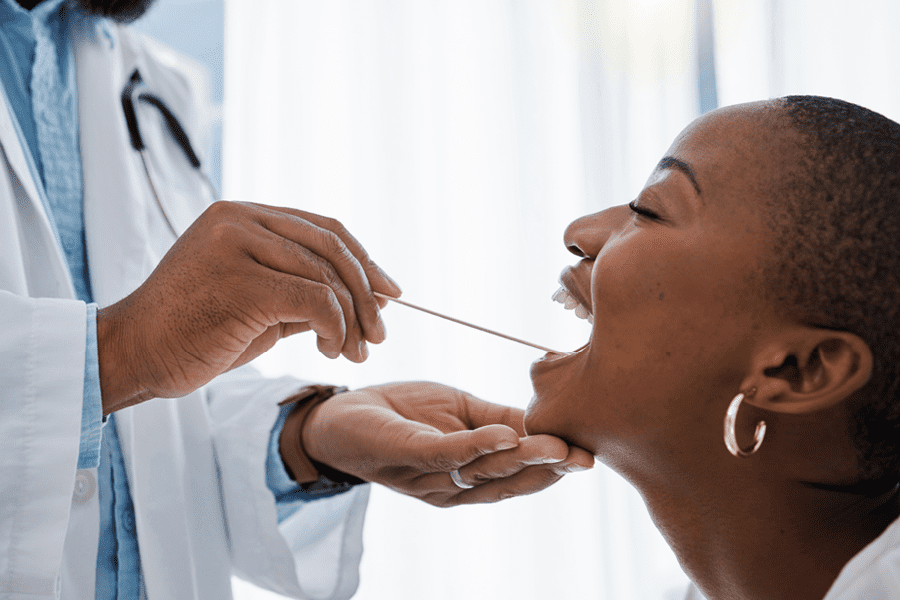
Oral cancer is a broad term for cancer that can impact the inside of your mouth and throat. Oral cancer can develop on your lips, tongue, the lining of your cheeks, the roof and lower part of your mouth, and nearly all parts of your oral cavity.

According to the American Cancer Society, “Almost all of the cancers in the oral cavity and oropharynx are squamous cell carcinomas, also called squamous cell cancers. These cancers start in squamous cells, which are flat, thin cells that form the lining of the mouth and throat.”

Once these cells are compromised, the cancer cells multiply quickly and can spread to other areas in the body, making it more difficult to treat.

Signs of oral cancer

In its early stages, oral cancer typically doesn’t cause any pain or other symptoms.

However, if you notice any of the following changes in your mouth be sure to contact your dentist and physician for further evaluation:

  • A sore on your lips or mouth that doesn’t go away within two weeks
  • A chronic earache
  • Crusty or rough spots on your lips, cheeks, or gums
  • Difficulty chewing or swallowing
  • Difficulty speaking or moving your jaw or tongue
  • Areas of bleeding in your mouth with no obvious reason

Regular dental visits are an opportunity for early detection of oral cancer, often before any symptoms appear. Make those twice-yearly check-ups a priority. Each one includes a potentially lifesaving oral cancer screening.

Click here to find an in-network dentist near you.

Causes of oral cancer

Oral cancer is caused by changes or mutations in the DNA of the cells that make up your oral cavity. These changes cause them to multiply uncontrollably and spread. Sometimes these changes occur for no reason. However, there are activities that may increase your risk of developing the disease.

Risk factors for developing oral cancer 

Using tobacco products: Using tobacco products of any kind, whether chewed, inhaled, or held and spat, dramatically increases your risk of developing oral cancer. According to the American Cancer Society, “Tobacco use is one of the strongest risk factors for head and neck cancers, including oral cavity and oropharyngeal cancer.”

Exposure to ultraviolet light: According to the Cancer Treatment Centers of America, people who work outside, use tanning beds, and have prolonged exposure to the sun have a higher risk of developing lip cancers.

Excessive alcohol use: Moderate and excessive alcohol consumption is linked to an increased risk of oral cancer. Studies have suggested that moderate drinkers have nearly double the risk of developing oral cancer. Heavy drinkers are up to five times as likely to develop the disease compared to non-drinkers.

Human papillomaviruses (HPV) infection: HPV are a group of more than 100 related viruses. Some are linked to the development of cancer, like oral and oropharyngeal cancers. HPV is believed to cause 70% of oropharyngeal cancers in the U.S. These viruses are mostly spread through skin-to-skin contact and oral-genital contact.

For more information on HPV and oral health, click here.

Poor oral health: Research shows poor oral health increases your oral cancer risk by creating chronic inflammation that damages DNA over time. When you skip regular brushing, flossing, and dental visits, harmful bacteria flourish, which can lead to gum disease or periodontitis. This also creates an environment where cancer cells can develop more easily.

Early detection of oral cancer is key

Early diagnosis of oral cancer dramatically improves survival rates because treatment can begin before it spreads beyond the oral cavity. That’s why oral cancer screenings during your regular dental visits are so crucial. Your dentist performs a comprehensive exam of the entire mouth at each checkup, making twice-yearly appointments one of your best defenses against the disease.

Ready to learn more about oral cancer? Check out this blog: “Lower risk of oral cancer linked to flossing, dentist visits.”

Kidneys and oral health: Can kidney disease affect oral health?

The human body is a complex structure made up of systems that depend on each other. As a result, different parts of our bodies can have a direct effect on others—sometimes good and sometimes bad.

This proves to be particularly true for individuals with kidney disease. Kidney disease is a collapse of your renal system’s ability to filter wastes from your blood. It can also affect other areas of your body, including your mouth. Like many other diseases, researchers have found several connections between kidney disease and oral health. Because of this, it’s essential for people with kidney disease to take extra care of their oral hygiene to avoid developing new or worsening symptoms.

If you’ve been diagnosed with kidney disease, you may be more likely to develop:

Dry mouth. According to the Journal of the American Dental Association, more than 500 medications can cause dry mouth, including drugs used to treat kidney disease. A dry mouth can be uncomfortable for many, cause difficulty when eating or drinking, and may even lead to bad breath. Your mouth uses saliva to clear away detritus and harmful bacteria from the surface of your teeth, so people with dry mouth may be at risk for tooth decay.

  • What you can do. Fortunately, there are several things you can do to help manage dry mouth. Visit your dentist regularly; brush and floss daily; opt for soft, moist foods; and use saliva substitutes and lubricants when necessary.

Oral lesions. An oral lesion is a mouth ulcer, sore, or open wound found on the mucous membrane of the oral cavity. Dentists often check for oral lesions because some may present the risk of transforming into oral cancer if left untreated. A study conducted by BMC Oral Health found that those with chronic kidney disease (CKD) have a higher instance of oral lesions than those without CKD. Results showed oral lesions present in 96.5%vof CKD patients compared with only 16.7%vof those without DKD.

  • What you can do. Visiting the dentist at least once a year can help decrease the chance of any oral lesions going unchecked. If your dentist identifies any lesions, they’ll be more likely to take preventive measures to avoid extensive treatments down the road.

Periodontitis. More commonly known as gum disease, periodontitis is a severe infection that spreads beyond the gum line and can destroy the bone tissue supporting teeth, sometimes leading to tooth loss. A study conducted by the Pakistan Journal of Medical Science found that patients with CKD have higher prevalence of gum disease and that there’s a “bidirectional relation” between CKD and gum disease. Researchers believe this could be due to an imbalance between reactive oxygen species and the body’s antioxidant capacity, which ultimately damages tissue cells.

  • What you can do. You can prevent the progression of gum disease by adhering to better oral hygiene habits at home, such as following your doctor’s recommendations for brushing and flossing and avoiding smoking.

Preparing for Dental Procedures with Kidney Disease

Kidney disease and your oral health can have adverse effects on each other, which is why it’s essential to communicate with both your kidney doctor and oral provider when it comes to upcoming procedures. Because a weakened immune system is a symptom of both kidney disease and its treatment, individuals are more susceptible to infections that can occur during and after dental procedures. Doctors can help by prescribing antibiotics that help fight infection. Lastly, be sure to bring a list of medications you’re taking to your dentist prior to any procedure.

Tips for Maintaining Good Oral Health

Individuals diagnosed with kidney disease have a greater risk of developing oral health issues like those listed above. Therefore, it’s important to practice a preventive oral health routine, including:

  • Flossing at least once a day
  • Brushing twice or more a day
  • Using products that contain fluoride to protect your teeth
  • Visiting with your dentist regularly

Teeth whitening: Do’s and don’ts of brightening your smile

*Updated July 2025

With so many tips, products, and services promising a brighter smile, teeth whitening can quickly become overwhelming. From whitening strips to special toothpastes, there are countless products that promise stunning results.

Before jumping on the latest trend, it’s essential to understand the do’s and don’ts to protect your oral health while enhancing your smile.

What causes teeth to change color

Before starting a new teeth whitening routine, consider simple changes you can make at home to enhance your smile. Small lifestyle adjustments can make a big difference in keeping your teeth bright.

Some of the most common factors that play into teeth losing their shine include:

The do’s and don’ts of teeth whitening

Now that you know what can cause your teeth to lose their sparkle, here are some teeth whitening do’s and don’ts to help you brighten your smile safely and effectively:

Do’s of teeth whitening

  • Talk to your dentist before starting any teeth whitening treatments. It’s important for them to know the state of your oral health before you set out to make cosmetic changes.
  • Consult with your oral health provider about in-house options such as chairside bleaching, which is done during an appointment, or at-home options using custom bleaching trays.
  • Research the best products for your goals. It should come as no surprise that some teeth whitening items won’t get the job done, and others can even harm your oral health. When in doubt, ask your dentist for advice.
  • Know your benefits and coverage ahead of time. Many cosmetic procedures aren’t covered and can’t be paid for with options like flexible spending accounts (FSAs).
  • Maintain your regular oral health routine. Remember to brush for at least two minutes twice a day and make sure you are flossing properly.
  • Visit your dentist regularly so they can make sure your teeth and mouth are healthy.

Don’ts of teeth whitening

  • As stated earlier, don’t start any teeth whitening treatments without consulting your dentist.
  • If you’re pregnant or nursing, teeth whitening treatments shouldn’t be performed.
  • Looking for a cheaper at-home alternative to bleach trays? Don’t just pick something off the shelf. Many products are sold online and in grocery stores, but that doesn’t mean that these over-the-counter products are safe or effective. Look for items approved by the American Dental Association here first.
  • Don’t assume teeth whitening will work evenly on all your teeth. For example, whitening doesn’t work on caps, veneers, crowns, or fillings. Teeth whitening also may not work if your teeth are excessively discolored or have suffered trauma.
  • Don’t forget that teeth whitening can lead to or even heighten tooth sensitivity. If this happens to you, make sure to discuss with your dentist ways to balance or remedy your sensitivity.
  • Don’t try DIY teeth whitening! Social media trends can be dangerous to your oral health.

Teeth whitening can be effective when done correctly

As you can see, there is a lot to consider when it comes to teeth whitening, including consulting with your dental team to make sure any treatment won’t harm your oral health.

The best way to keep your smile bright is with a good oral health care routine. Maintaining a healthy mouth requires consistent care with brushing, flossing, and visiting the dentist for checkups and cleanings at least once a year.

The importance of keeping your pup’s mouth healthy

When we say that good oral health is the foundation for quality overall health, most people probably think this only applies to humans. But your dog’s oral health is just as important in keeping them healthy and happy for the duration of their life.

Did you know that gum disease is the most common disease adult dogs have? By the time they reach this stage, it’s already too late. That’s why it’s paramount that you start taking care of your dog’s oral health as soon as you bring your new puppy home.

What To Look For

According to the American Animal Hospital Association, signs of dental disease are present in pets by age 3. This means you must get to work early in order to keep your dog’s oral health on track as it grows from a little bundle of ears and paws into a key member of your family.

So what should you be looking for when it comes to dental disease or trauma? There are a variety of indicators that your dog may need to see a vet, including:

  • Bad breath. While new puppy smell might be the best thing ever, you can’t expect their mouth to smell like yours after a fresh brushing. However, excessive or uncharacteristically bad scents could mean there’s an underlying issue.
  • Discolored gums or teeth. If your new best friend’s gums aren’t pink, but instead seem white or red, or if there are signs of tartar on their teeth, your dog could be at risk.
  • Behavioral changes. If your typically hyper puppy seems unusually lethargic or won’t eat, or if they appear sensitive to touches around the mouth or muzzle, there could be an internal issue. Oral infections can spread throughout the body to other organs, so it’s important to get your pup looked at.
  • Broken teeth. Outside of visually inspecting your dog’s teeth for plaque or tartar buildup, you should also look for any damaged or broken teeth. Your puppy won’t show pain from a damaged tooth, but they’re definitely feeling it.

How To Treat Your Dog’s Oral Health Issues

Now that you know what to look for, here are suggested some fixes. Your vet may recommend a number of specific ways to treat what ails your pup, including:

  • Scheduling a cleaning. Just like with humans, dogs should have regular dental check-ups to ensure their mouth is healthy. But unlike with people, pets require anesthesia for oral cleanings in order to protect them while making sure sufficient X-rays are taken and calculus and tartar are effectively removed, both above and below the gum line.
  • Removing problem teeth. If you’re staying on top of your check-ups with your vet, you’ll likely be presented with a tooth removal scenario following X-rays. But accidents do happen, so be sure to let your vet know immediately if you identify a chipped, cracked, broken, or missing tooth. It may be causing a lot of pain.

How To Maintain Your Dog’s Oral Health

When you consider everything that goes into raising your puppy to be an obedient member of your family—training, recreation, treats, all the snuggles and pets—maintaining your dog’s oral health will seem like a piece of cake.

Here are some steps you can take at home to keep your pup’s mouth fresh and healthy:

  • Chews. While chewing unapproved items—like socks, shoes, the TV remote, or a hole in the floor—is discouraged, chewing is a natural part of a dog’s life, and it can help keep their teeth clean as well. The abrasion on the teeth often helps remove plaque and tartar, and some specific chew toys and edible items for them to focus on, like rawhide and bully sticks, can take it a step further. It is important to avoid hard items like antlers and synthetic bones, as they can cause teeth to fracture or break.
  • Treats and Food. If you’ve ever owned a pup before, you’re no doubt aware of the various treats and foods available for all your pet’s needs. While some of these items can certainly be effective at reducing plaque and tartar, you should look for items specifically endorsed by the Veterinary Oral Health Council as they’ve been tested for safety and efficacy.
  • Brushing Teeth. You brush your own teeth twice a day and floss regularly, right? So why wouldn’t you do something similar for your furry friend? While you don’t need to do it twice a day, and you should definitely leave the floss far away from your dog’s reach, you should be aiming for a daily brushing routine. It’s the best, most direct way to remove debris from your pup’s mouth. Just make sure you use dog-specific brushes/wipes and toothpastes. Toothpaste for humans can contain sugar substitutes like xylitol, which is essentially poison for your dog.

With a little extra care and work, maintaining your dog’s oral health from their first sit at home to their last lick on the cheek will keep them happy, healthy, and free from dental pain. It will also keep you from shelling out any extra money for surprise oral surgeries and tooth removals. It’s a win-win.

Saint Patrick’s Day: Alcohol and your teeth

St. Patrick’s Day has a reputation, and as much fun as it can be, the day doesn’t only leave a hangover. It also paves the way for cavities to set up shop on your teeth.

Tooth decay caused by alcohol consumption is a problem because of the sugars and acids in alcoholic drinks. When these sugars combine with natural bacteria in the mouth, they form an acid that attacks enamel and breaks it down. This is especially true when the teeth are constantly exposed to sugars and starches in alcohol without a break.

But it’s not just the sugar and starches in alcohol that can be harmful to teeth. Saliva is a powerful tool in reducing the incidence of cavities, and alcohol dries out the mouth just like smoking does. Dry mouth can accelerate the damage caused by the sugar in alcohol.

So be warned – if you’re going to partake in St. Patrick’s Day shenanigans, give your mouth a break. Mix in some water between beverages as a buffer. It will clean your teeth and keep your body hydrated. Also, brush and floss your teeth as soon as possible after you’re finished having fun!

For those planning on a weeklong St. Patrick’s Day celebration, the probability of damage from alcohol is much higher.

Heavy drinking can cause:

  • Irritation of the gums, tongue, and oral tissue
  • Increase in tooth decay
  • Increased risk of gum disease
  • Poor healing after dental surgery
  • Poor dental health habits

Heavy drinkers are also at greater risk of developing cancer in the mouth, throat, and esophagus. Obviously these are side effects that you want to avoid, so if you are going out for St. Patrick’s Day, take it easy. Your teeth will thank you!

Wondering what other drinks can hurt your teeth? Consider kicking your soda habit.

Reasons to love electric toothbrushes and how to properly brush with them

*Updated June 2022

In this day in age, it seems like everything is going electric—cars, fireplaces, scooters, and even your toothbrush! And just like an electric scooter takes the labor out of scooting, or an electric vehicle increases efficiency on the road, electric toothbrushes help make our oral health routine a little easier. There are so many reasons why we love electric toothbrushes. So, let’s go ahead and dive into their benefits and how to master your electric brushing technique. 

Why Go Electric? 

They’re Easy to Use

We love electric toothbrushes because they remove most of the physical work that comes with brushing your teeth. By using bristle vibration and rotation technology, electronic toothbrushes can essentially do all the work for you. And what’s not to love about that? Having the option to set your toothbrush on “auto-drive” also helps provide greater access to oral health. For example, it can be helpful for those with mobility disabilities like carpal tunnel or arthritis that can sometimes struggle with manual brushing movements.

They Provide a Deeper Clean

A study conducted by Cochrane Oral Health Group revealed that electric toothbrushes are more effective at cleaning compared to a manual toothbrush. After three months of brushing with an electric toothbrush, participants reduced plaque by 21% and gingivitis by 11%. In addition, many electric toothbrushes are equipped with built-in timers that can help individuals brush for the dentist-recommended time of two minutes.

They Can Be Fun for Kids!

Brushing with an electric toothbrush can help kids learn a consistent oral health routine. They might have fun picking various brushing modes, waiting for the timer to reach zero, or in advanced models, even connecting with different apps for games. Regardless of the reason, electric toothbrushes can help make kids more enthusiastic about their daily brushing routine—which is a win all around.

How to Brush with an Electric Toothbrush

One of the most important things to remember when using an electric toothbrush is that it’s doing the work for you, so there’s no need to push down or scrub back and forth. Whether it’s your first time or you need a refresher, next time you brush with an electric toothbrush, we recommend following these five steps:

  1. Properly floss your teeth.
  2. Hold the brush at a 45-degree angle.
  3. Place the brush over each tooth for three to five seconds, starting in the front and slowly moving to the back.
  4. Gently run the brush over your gums. If your brush has a ‘gentle’ or ‘gum’ setting, be sure to switch to it.
  5. Replace the brush head every three to four months. 

If you notice tooth sensitivity, swelling, and bleeding, ask your dentist if you may be brushing too hard. These could also be underlying symptoms of gum disease.

Does This Mean Manual Toothbrushes are Bad? 

Electric toothbrushes have many benefits, but does this mean you should throw away your manual toothbrush? Absolutely not! If you’re able to achieve successful oral health with your manual toothbrush, then keep doing what you’re doing. You win either way. All brushes, including manual, can be effective at removing plaque if used correctly and for the appropriate length of time, usually about two minutes at each brushing. As ADA dentist Dr. Richard Price says, “it’s not the brush. It’s the brusher.”

For more oral health tips, check out our blog. Need to find a dentist? Use our handy search tool.

How the tooth fairy encourages children to take care of their teeth

*Updated August 2023

Nearly 80% of homes in the United States are visited by the Tooth Fairy, and that’s a good thing! She helps parents encourage their children to take care of their teeth and promote good oral health habits from a young age.

Here are some fun and creative ways to introduce the Tooth Fairy and the importance of good oral health to the children in your life.

Introducing the Tooth Fairy

It’s a good idea to talk about the Tooth Fairy and the rewards she brings for having clean teeth before her first debut. This can help motivate children to take great care of their teeth before they’re ready to fall out. Before the first tooth becomes loose, it’s important to encourage your child to partake in a good oral health routine every day. This includes brushing twice and flossing once daily to keep their teeth shiny and healthy for the Tooth Fairy.

Letter from the Tooth Fairy

When your child loses their first tooth, the first thing you should do is congratulate them on the milestone. One way to do so is to give them a personalized letter from the Tooth Fairy. We have sample letters that celebrate the occasion and emphasize the importance of keeping all their teeth healthy. If providing a letter isn’t enough, there’s also a Certificate of Achievement that inspires them to keep up on their dental health routine.

Gifts from the Tooth Fairy

The Tooth Fairy usually gives out cash—at an average rate of $6.36 per tooth—but there are other gifts that are fun and encourage good oral health habits. The Tooth Fairy may bring:

  • A new toothbrush, possibly one with their favorite character on it
  • A new tube of their favorite toothpaste 
  • A Tooth Fairy-sized travel toothpaste
  • Floss
  • Mini mouthwashes

Whether the Tooth Fairy brings cash or gifts, small rewards can make a big difference in encouraging children to take care of their teeth.

Visits from the Tooth Fairy help children take care of their teeth

Proper dental hygiene is something that your children will need throughout their lives for good oral and overall health. Introducing the Tooth Fairy at a young age, teaching children to start and maintain good oral health habits, and making each lost tooth a magical experience are all important parts of helping them take care of their teeth.

To learn more about the Tooth Fairy, click here.

Four behaviors to age gracefully

Guess what you and fine wine have in common? That’s right, you both get better with age! Getting older doesn’t have to be something you dread. Here are some simple tips for aging gracefully that consider both your oral and overall health, promoting a healthy lifestyle as you become an older adult. 

1. Brush, Floss, and Visit the Dentist

Brush and floss twice a day for a healthier smile! Brushing and flossing helps to remove plaque and leftover food from your mouth and between your teeth. Not sticking to the routine could lead to yellow teeth and cavities. Combine flossing and twice-daily brushing with regular dentist visits for a comprehensive check-up that goes beyond your teeth. Dentists screen for oral cancer and other health issues like diabetes and heart disease during your exam. 

2. Slow Down on Sugar

You’ve probably heard it before, but it’s true—you are what you eat. Ariel Ostad, a doctor of dermatology, says a poor diet can speed up the aging process in our skin and teeth. One of the biggest culprits is sugar. When you eat more sugar than your cells can process, the leftover sugar molecules are exposed to proteins, creating advanced glycation end products, or AGEs. In time, AGEs can ruin your skin’s collagen, which is the protein that helps keep skin youthful and firm. A high-sugar diet can also ruin your smile. It sticks to your teeth and sits between them and along the gum line, encouraging plaque and bacteria that can lead to decay. 

3. Move More 

Another tip to age gracefully is regular exercise. Researchers at McMaster University found that people over the age of 40 who exercise regularly have healthier skin.

Exercise doesn’t have to be limited to going to the gym. There are several forms of cardio that you can do at home to help keep your heart and lungs healthy – for example, jumping jacks, mountain climbers, and jogging in place. Stretching is another form of exercise that helps us age gracefully. Flexibility exercises help to reduce our chances of muscle cramps and joint pain, and help increase our range of motion and maintain our flexibility for everyday things like tying shoes. 

4. Stress Less 

We can’t always control what happens to us in life, but we can control our reaction. One study says excessively worrying about things like your job, finances, or relationships can lead to those issues showing on our faces.

Stress can take a toll on your skin through wrinkles, bags under the eyes, flaky skin, and acne. Manage stress by learning how to say “no” and not taking on too much in your professional or personal life. If you can’t change the situation, consider changing how you react by adjusting your standards and practicing gratitude.

Looking for more on healthy practices for older adults? Check out:

How your oral health affects Alzheimer’s

Alzheimer’s Disease is a public health crisis in the United States, and according to the Alzheimer’s Association, more than six million Americans over the age of 65 are currently living with Alzheimer’s Disease. What’s worse is that this number is expected to climb to over 13 million Americans by the year 2050. While other major diseases such as heart disease have seen deaths decrease by as much as 7.3% between 2000 and 2019, deaths due Alzheimer’s have actually increased 145%. This included a 16% increase during the heart of the COVID pandemic. 

There is no cure for Alzheimer’s, but there are things we can all do to lower our risk, and one of these is something we should be doing anyway: managing our oral health.

Is there a connection between poor oral health and Alzheimer’s Disease?

Scientists and medical professionals have been seeing a connection between oral health and overall health for several years, but it wasn’t until somewhat recently that they started to see the connection between poor oral health habits, gum disease, and an increased risk of Alzheimer’s Disease. In a study published in April 2021, researchers started seeing this.

“To our knowledge, this is the first study showing an association between the imbalanced bacterial community found under the gumline and a cerebrospinal fluid (CSF) biomarker of Alzheimer’s disease in cognitively normal older adults,” said Angela Kamer, DDS, PhD, associate professor of periodontology and implant dentistry at NYU College of Dentistry and the study’s lead author. “The mouth is home to both harmful bacteria that promote inflammation and healthy, protective bacteria. We found that having evidence for brain amyloid was associated with increased harmful and decreased beneficial bacteria.”

Can maintaining good oral health habits reduce the risk of contracting Alzheimer’s Disease?

Based on the results the authors of this study saw, it is believed that people who have healthier mouths and gums, and thus healthier bacteria in their gumlines, will not only have a lower risk of Alzheimer’s Disease but their healthy gums may also act as a protectant against Alzheimer’s. 

The results showed that individuals with more harmful versus healthy bacteria were more likely to have the Alzheimer’s signature of reduced CSF amyloid levels. The researchers hypothesize that because high levels of healthy bacteria help maintain bacterial balance and decrease inflammation, they may be protective against Alzheimer’s. Given these results and hypotheses, it’s a pretty safe assumption that people who have better oral health habits, such as regular brushing, flossing, and dentist visits, will presumably have a lower risk of Alzheimer’s disease.

This is just another item in a long line of reasons to maintain good oral health practices well into your older years.

Older adults with Alzheimer’s Disease experience higher rates of oral health issues

It’s also important to remember that older adults who have memory-loss related diseases such as Alzheimer’s Disease and dementia are at a higher risk of oral health related issues such as tooth loss, cavities, and gum disease. Reduced cognition and dexterity can complicate matters when it comes to brushing and flossing. Those with Alzheimer’s Disease also experience lower amounts of saliva being produced, which is our body’s natural way of keeping bacteria at bay and our mouths free of food debris. This is also where problems can begin to snowball for those with cognitive disorders.

Oral health problems paired with things such as low saliva production can lead to complications including aspiration pneumonia, which can be deadly if not treated. If you have a family member or loved one who is in cognitive decline or has a disease such as dementia or Alzheimer’s, it’s so important to help and support them with their oral health routine on a daily basis.

The connection between poor oral health and Alzheimer’s Disease is very evident. While brushing, flossing, and visiting the dentist regularly won’t cure or totally prevent these cognitive diseases from happening, they can significantly reduce the risk as we age.


For more educational information and ways you can reduce the risk of disease by maintaining good oral health habits, follow our Facebook page or read more articles on our blog.